

Not every business needs a full-time executive to access senior-level expertise. For growing companies navigating financial complexity, operational change, or a major strategic initiative, a fractional executive can provide experienced leadership without the commitment of a permanent appointment.
For business owners and boards, the decision is not simply whether to hire an executive. It’s determining what level of leadership the business needs, how quickly that expertise is required, and whether the requirement is temporary, part-time or ongoing.
As companies reconsider their leadership structures, fractional executives are becoming another option worth considering alongside interim and permanent appointments. Understanding when each model makes sense is essential to making the right hiring decision.
Let’s explore what’s driving the growing demand for fractional executives
1. Companies Are Taking a Closer Look at Executive Hiring Costs
Hiring a full-time executive involves a significant financial commitment, including salary, bonuses, benefits, and other employment costs. For companies that need senior-level expertise only a few days a week, these expenses may be difficult to justify.
Fractional arrangements allow businesses to structure executive support around their actual requirements. While the cost of senior expertise remains significant, companies may avoid the expense of a full-time position when the workload does not justify one. The key is to assess the total cost against the expertise required, the expected outcomes and the level of ongoing involvement the business needs.
2. Specialized Expertise Doesn’t Always Require a Permanent Appointment
Some business situations require specialized executive expertise for a limited period. For example, a company planning a merger or acquisition may need someone experienced in managing complex transactions. Similarly, a business implementing new technology may require a senior leader who has successfully managed similar projects.
Once these projects are completed, the company may no longer need that level of specialized support. Hiring a fractional executive allows businesses to bring in the right expertise for a specific purpose without committing to a permanent position.
3. Speed and Availability May Influence the Decision
Executive recruitment takes time, particularly when a company needs someone with a specific combination of industry experience, leadership skills, and commercial judgment.
A permanent search can take several months. A fractional executive who is already operating independently may be able to start much sooner, depending on availability and the assignment’s complexity. That difference matters when a business is in the midst of a transformation project, negotiating refinancing, or implementing a critical system.
4. Growing Businesses Need Room to Adjust
Leadership requirements rarely stay the same as a company grows. A business may initially need a senior finance executive for two days a week. As operations expand, the workload and responsibilities may increase enough to justify a permanent CFO.
A fractional appointment gives the company time to assess its requirements before committing to a full-time position. In some cases, it also provides an opportunity to evaluate whether the executive could be a suitable permanent hire. Professional networking platforms, particularly LinkedIn, have also made independent executives more
visible and easier to reach. Companies have more ways to identify experienced professionals beyond the traditional permanent recruitment market.
5. Greater Talent Supply. Experienced Executives Are Choosing Greater Flexibility
Executives who have spent decades in senior leadership roles often reach a stage where they prefer greater flexibility over another demanding full-time position. Fractional roles give them more control over where they work, how much time they commit, and which organizations they support.
This allows them to stay professionally active, pursue assignments that interest them, and balance their careers with personal priorities. At the same time, employers gain access to seasoned executives who might not otherwise consider a traditional permanent position.
When Does Fractional Leadership Work, and When Doesn’t It?
Fractional leadership works well when a company needs experienced guidance for specific responsibilities but doesn’t need an executive presence every day. For example, a business with an established management team can hire a fractional CFO to oversee financial planning, budgeting, or strategic decisions a few days each month.
However, this arrangement is less suitable when a company needs someone to manage teams daily, build organizational culture, or lead through a prolonged crisis. Such responsibilities often require continuous involvement and accountability.
Another concern is divided attention, as fractional executives often work with multiple organizations. Therefore, before hiring, businesses should agree on the executive’s responsibilities, decision-making authority, availability, and who will handle urgent matters when they are unavailable.
Fractional, Interim, or Permanent: Which Makes More Sense?
These hiring models address different leadership requirements, although their responsibilities can sometimes overlap.
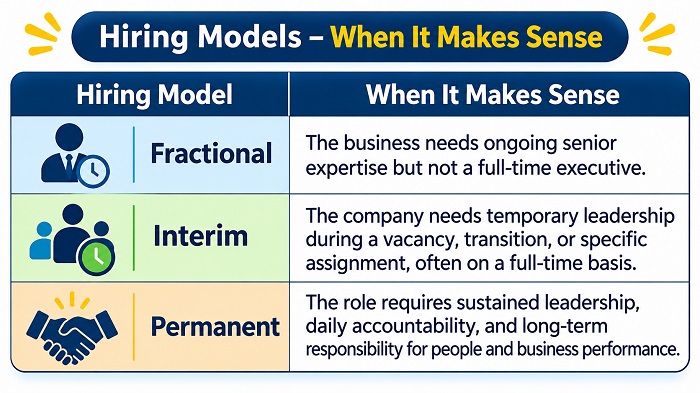
The distinction matters because a temporary requirement does not always mean a part-time requirement. An organization facing an immediate leadership vacancy may need an interim executive to take full responsibility until it makes a permanent appointment.
Similarly, a company that needs strategic financial guidance a few days each month may find a fractional CFO entirely sufficient.
Choose the Right Leadership Model With Expert Guidance
Fractional, interim and permanent executives each serve a purpose. The right choice depends on the company’s stage of growth, the complexity of its challenges, the scope of the role and the level of leadership required.
Making the wrong decision can create more than unnecessary costs. It can leave critical responsibilities uncovered, place excessive demands on an existing management team or delay important business initiatives.
At Elite Search, Sandy Dennis works with business owners, boards and leadership teams to understand their executive hiring requirements and identify the right leadership talent. With more than 18 years of executive recruitment experience and a background in finance, Sandy brings a practical perspective to assessing leadership needs and navigating the executive talent market.
Whether a business requires permanent leadership or is evaluating other options, the starting point is the same: understanding what the organization needs to achieve and what kind of executive will best support those objectives.